

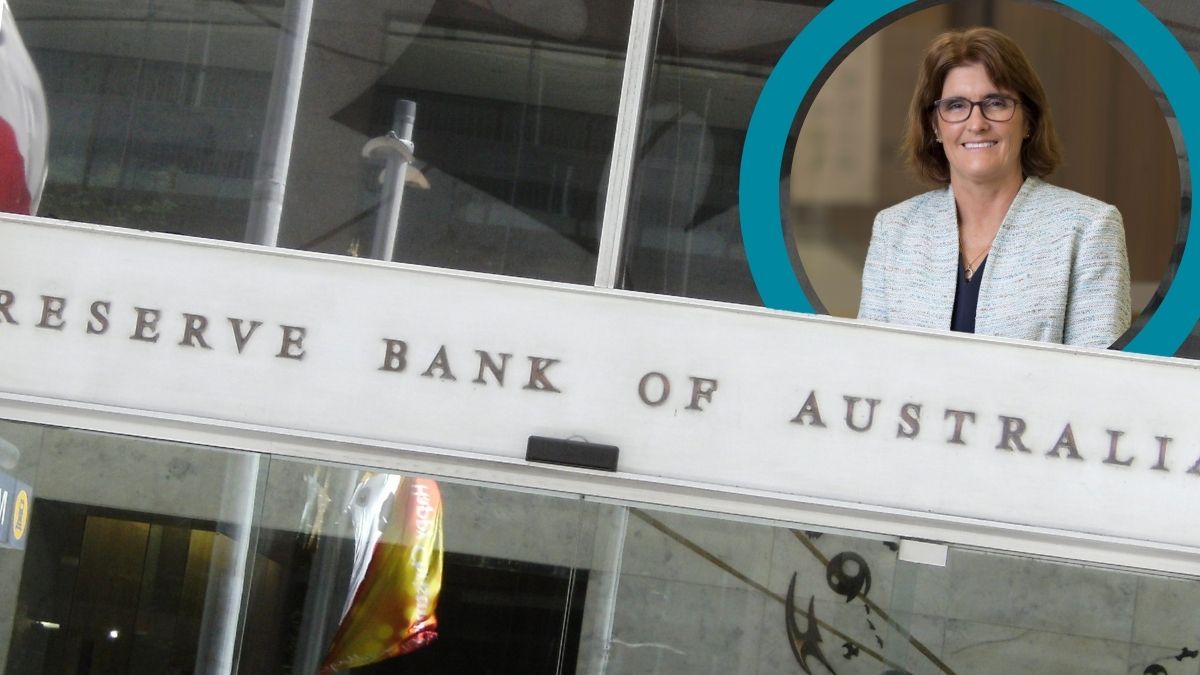
The choice to hold steady was widely expected by economists and the market, with many now warning future cuts aren't a sure thing.
It comes after underlying inflation lifted 1% in the September quarter and 3% year-on-year.
That saw it hitting the high-point of the central bank’s target band and rising at a rate RBA governor Michele Bullock had previously described as being “a material miss”.
"Financial conditions have eased since the beginning of the year, but it will take some time to see the full effects of earlier cash rate reductions" the RBA monetary policy board's post-meeting statement reads.
"Given this, and the recent evidence of more persistent inflation, the board judged that it was appropriate to remain cautious, updating its view of the outlook as the data evolve.
"The board remains alert to the heightened level of uncertainty about the outlook in both directions," the statement reads, suggesting the board might be attune to the prospect of rate hikes in the foreseeable future.
Additionally, the November meeting sees the release of new RBA forecasts, updated each quarter.
The central bank is now expecting underlying inflation to end the year at 3.2%, before falling to 2.7% by late 2026 and 2.7% for much of 2027.
Previously, the measure of underlying consumer price growth was forecast to end the year at 2.6% before easing in late 2027.
Until recently, the RBA's November meeting was labelled one to watch, with experts and the market largely expecting a cut.
"The RBA has clearly turned more cautious, which is quite a shift from the optimism we saw just weeks ago," Domain chief of research and economics Nicola Powell said.
"Consumers are spending again, which is great for the economy, but it also raises the risk of persistent inflation.
"Put simply, the RBA can't move too quickly to cut rates, which will disappoint many hopeful buyers and mortgage holders."
Where to from here?
Data provided by ANZ shows cash rate futures for September 2026 were trading at a weighted average of 3.39% on Monday, suggesting many bond traders aren't betting on further cuts.
Neither are CommBank economists, who expect the cash rate will remain at its current level for the foreseeable future.
"We expect it would take a material move higher in the unemployment rate, together with more moderate inflation prints, to bring the RBA back to the cutting table," Commbank head of Australian economics Belinda Allen said in late October.
As it stands, the RBA is now predicting unemployment to peak at 4.4% at the end of the year - down from September's 4.5% read - and remain there until at least late 2027.
When it comes to big bank rate cut forecasts, ANZ appears most bullish, tipping a rate cut for February 2026 while NAB doesn't expect easing before May 2026.
Westpac, meanwhile, is anticipating two rate cuts, with the first expected to come in May 2026 and the second in August 2026.
"Monetary policy is still somewhat restrictive, so some further cuts to the cash rate next year are warranted," Westpac chief economist and former RBA assistant governor Luci Ellis said.
"Although we expect the December quarter inflation data to be a lot less scary than the September quarter, we think it will take more than one quarter of data to convince the RBA that the inflation trend is still consistent with target beyond the short term."
Borrowing power boosts from rate cuts potentially negated
Three 25 basis point cuts, handed down in February, May, and August, have taken a bite out of home loan interest rates this year.
The typical variable rate on a new owner-occupier mortgage stands at around 5.5% p.a., according to RBA data covering August - down from a peak of 6.3% p.a. realised in much of 2024 and early 2025.
Such a drop would have seen the repayments on a $500,000, 30-year home loan fall from close to $3,100 per month to around $2,840 - offering more than $3,100 of annual savings.
What could rate cuts mean for you? Mortgage Repayment Calculator
However, in bad news for hopeful homebuyers seeking to enter the market, cash rate cuts have also spurred property price growth.
Rough calculations by data firm Cotality show a borrower on a median wage has seen their borrowing power rise around $51,000 in the wake of the 2025 rate cuts.
In the meantime, the median price of a capital city home has grown $54,000, potentially negating any benefit for first home buyers.
"With interest rates potentially at or near the end of their cutting cycle, we aren't likely to see a material boost to borrowing capacity from here," Cotality research director Tim Lawless said.
Cash rate hold likely won't dampen house price growth
Looking forward, today's cash rate hold likely won't dampen demand for property.
"Increased borrowing power, lower mortgage rates, and improving sentiment are fuelling renewed competition," REA Group senior economist Eleanor Creagh said.
"Keeping rates steady won't derail that recovery."
See also: Median house prices around Australia
Alongside rate cuts, prices are rising thanks in part to population growth and the 5% Deposit Scheme's expansion.
"With new supply constrained, these factors will keep upward pressure on prices, though affordability challenges mean the pace of gains is likely to remain slower than previous cutting cycles and vary across cities," Ms Creagh continued.
Advertisement
Lender Home Loan Interest Rate Comparison Rate* Monthly Repayment Repayment type Rate Type Offset Redraw Ongoing Fees Upfront Fees Max LVR Lump Sum Repayment Extra Repayments Split Loan Option Tags Features Link Compare Promoted Product Disclosure
Promoted
Disclosure
Promoted
Disclosure
Disclosure
Disclosure
Image created on Canva using assets from the Reserve Bank of Australia




Collections: RBA Cash Rates Interest Rates Mortgage News


Share